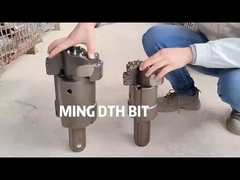
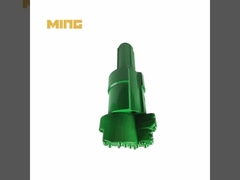
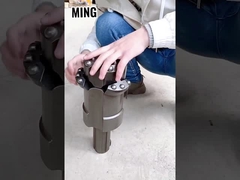
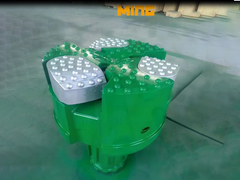
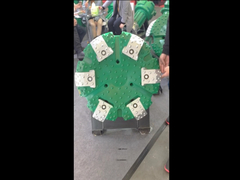
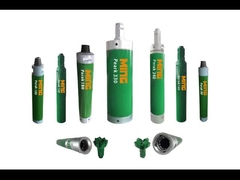
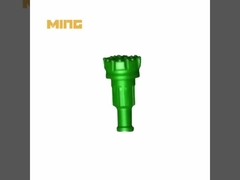
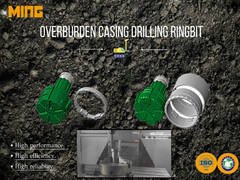
Brief: Odkryj 133 mm DTH System Wielkości Wielkości Wiertniczej, zaprojektowany do efektywnych operacji górniczych.Ten stały obudowy wiertniczej pierścienia bit działa bezproblemowo z Hammer DHD340 i 133mm OD rur obudowyDowiedz się więcej o jego koncentrycznym systemie wiercenia, odzyskiwalnych kawałkach pilotażowych i doskonałych zdolnościach spłukiwania.
Related Product Features:
Permanent casing drilling ring bit system with retrievable pilot bits for versatile drilling.
Kompatybilny z młotami DHD340 i rurami osłonowymi o średnicy zewnętrznej 133 mm dla bezproblemowej integracji.
Designed for drilling in any direction and ground condition, ensuring reliability.
Features large internal flushing holes and external flushing grooves for optimal performance.
Zawiera symetryczny bit pierścieniowy (rozwiertak) z wewnętrznym mocowaniem bagnetowym dla precyzji.
Casing shoe for driving of casing enhances stability and efficiency.
Available in multiple models to suit various drilling requirements.
Easy to order with specifications like casing tube OD & ID, ring bit diameter, and hammer shank.
Pytania:
What is drill casing in mining?
In underground mining, steel casing or steel pipe is used to line holes that have been bored or drilled for rising mains water, utility lines, and paste fill, protecting the contents from damage and loss into open voids or broken ground.
Jaka jest różnica między rurą wiertniczą a rurą osłonową?
Rura wiertarna obraca wiertarkę, aby wyciąć ją w skałę, dopóki nie osiągnie złóż, podczas gdy rura osłonowa jest rurą ustawioną wewnątrz wierzonej studni w celu ochrony i wspierania strumienia studni.
Where does overburden go during a mining operation?
Overburden is used for reprocessing, contouring land, and as a construction aggregate for buildings and roads. Mine tailings are reused for producing clay, tiles, glass, and concrete.